1 cm
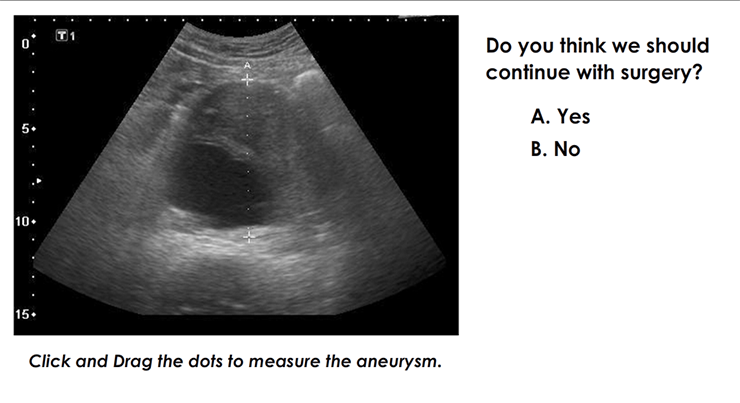
A. Yes
B. No
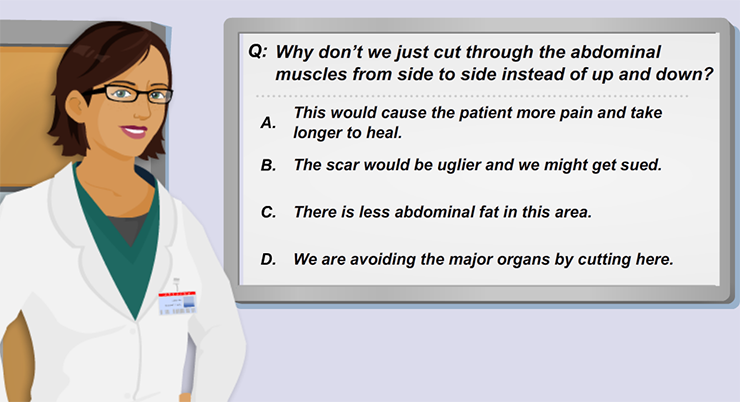
This would cause the patient more pain and take longer to heal.
The scar would be uglier and we might get sued.
There is less abdominal fat in this area.
We are avoiding the major organs by cutting here.
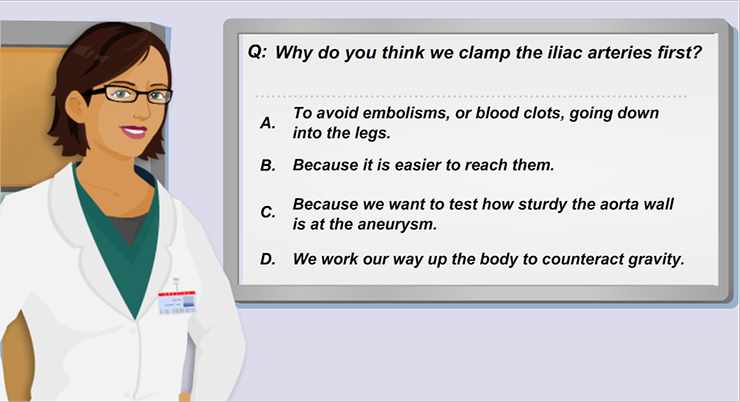
To avoid embolisms, or blood clots, going down into the legs.
Because it is easier to reach them.
Because we want to test how sturdy the aorta wall is at the aneurysm.
We work our way up the body to counteract gravity.
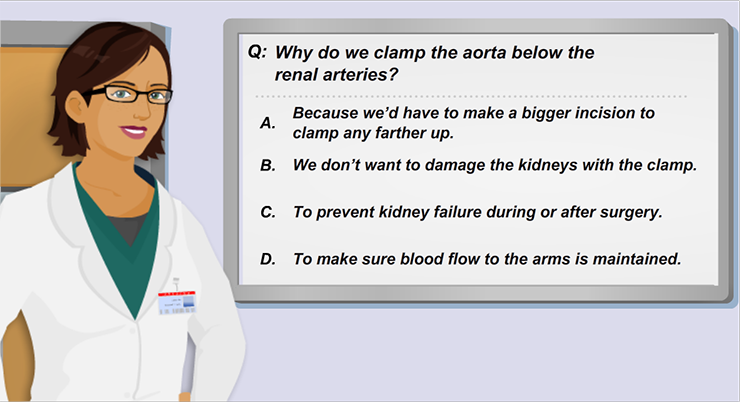
Because we’d have to make a bigger incision to clamp any farther up.
We don’t want to damage the kidneys with the clamp.
To prevent kidney failure during or after surgery.
To make sure blood flow to the arms is maintained.
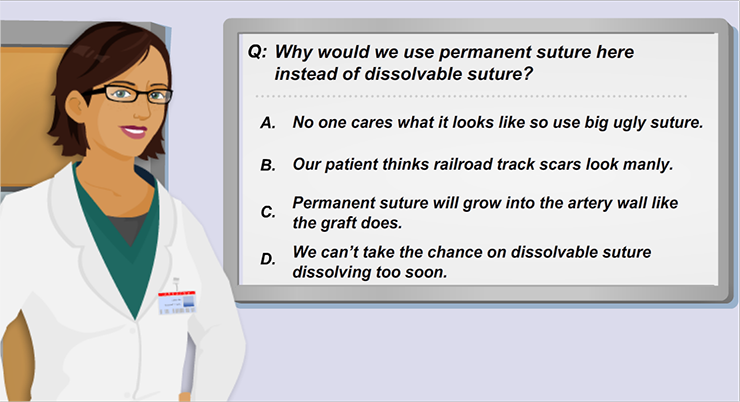
No one cares what it looks like so use big ugly suture.
Our patient thinks railroad track scars look manly.
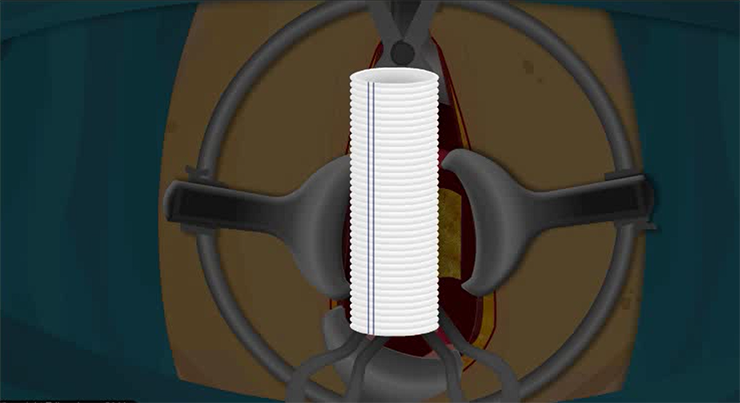
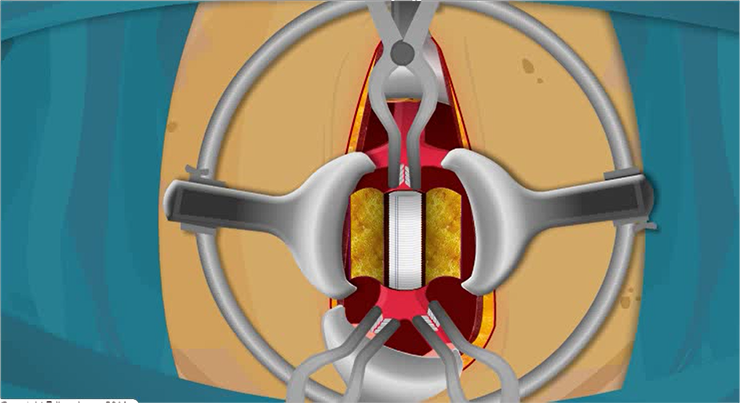
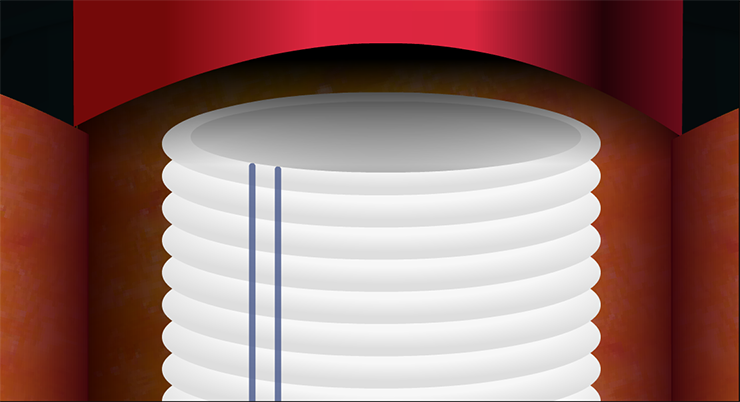
Permanent suture will grow into the artery wall like the graft does.
We can’t take the chance on dissolvable suture dissolving too soon.
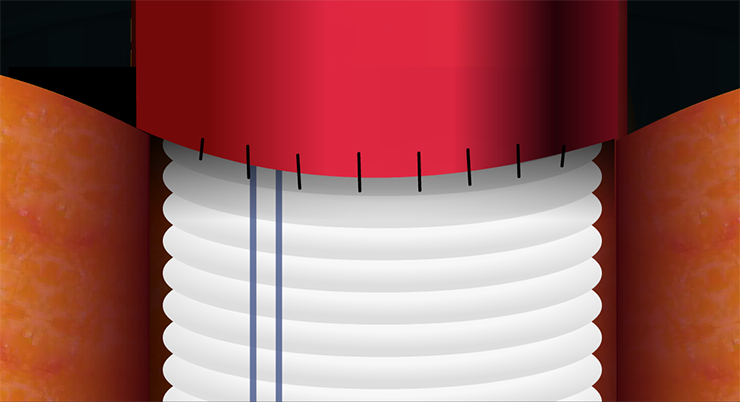
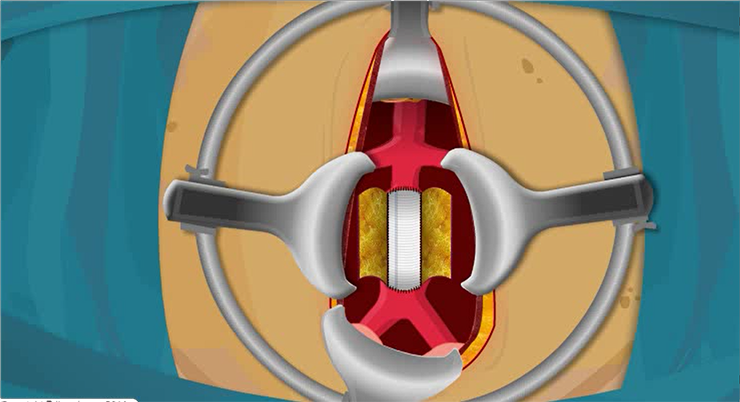
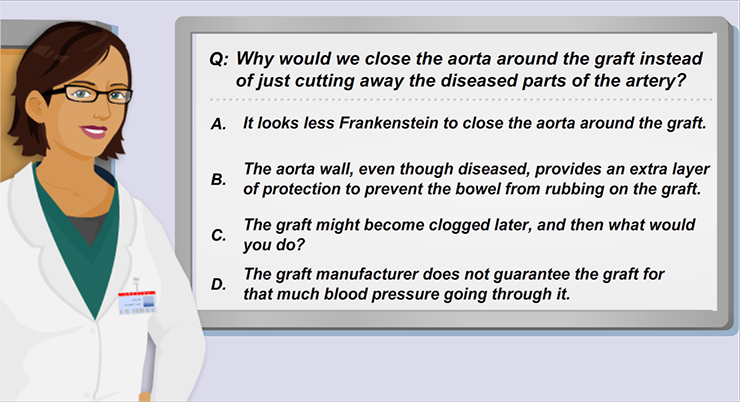
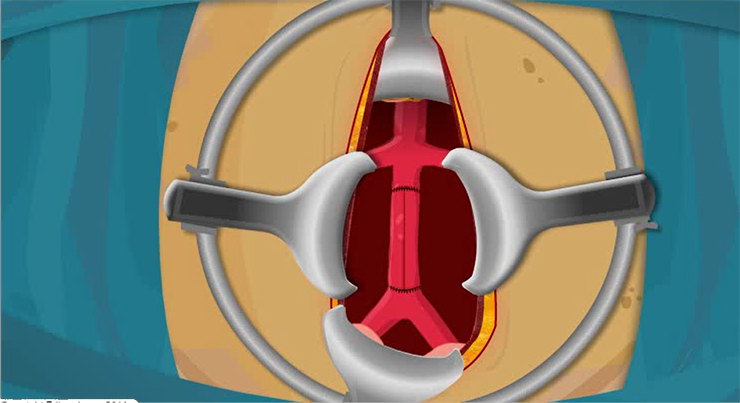
It looks less Frankenstein to close the aorta around the graft.
The aorta wall, even though diseased, provides an extra layer of protection to prevent the bowel from rubbing on the graft.
The graft might become clogged later, and then what would you do?
The graft manufacturer does not guarantee the graft for that much blood pressure going through it.
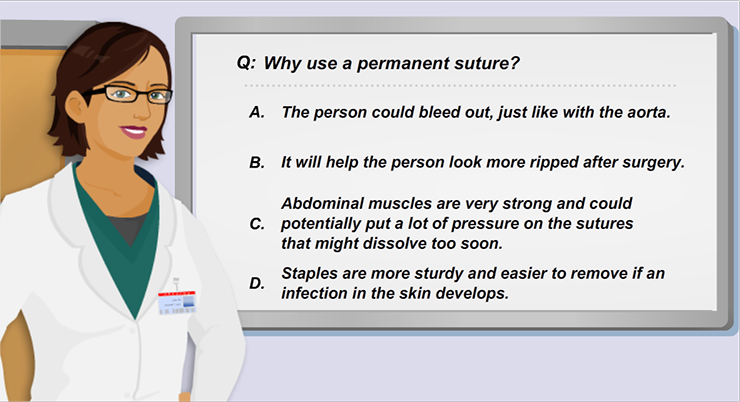
The person could bleed out, just like with the aorta.
It will help the person look more ripped after surgery.
Abdominal muscles are very strong and could potentially put a lot of pressure on the sutures that might dissolve too soon.
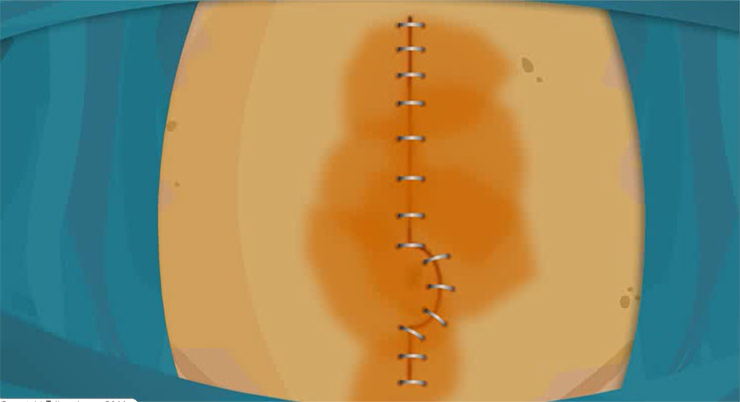
Staples are more sturdy and easier to remove if an infection in the skin develops.
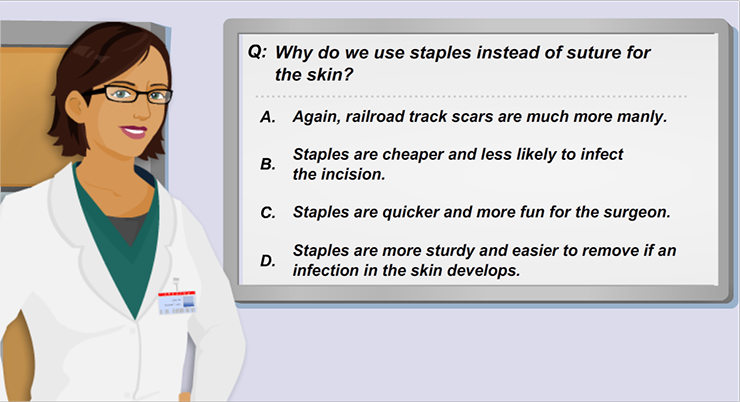
Again, railroad track scars are much more manly.
Staples are cheaper and less likely to infect the incision.
Staples are quicker and more fun for the surgeon.
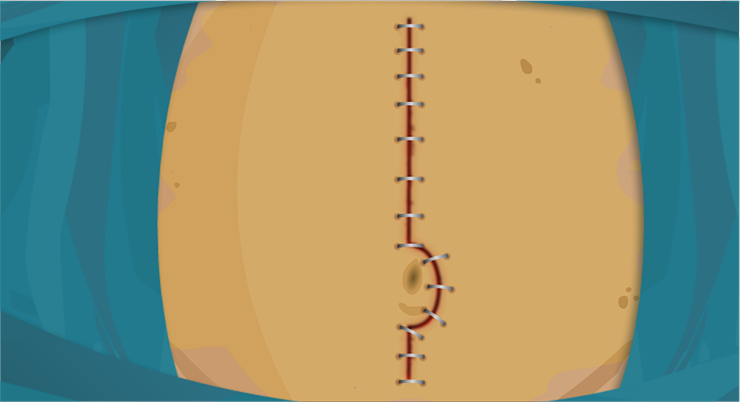
Staples are more sturdy and easier to remove if an infection in the skin develops.
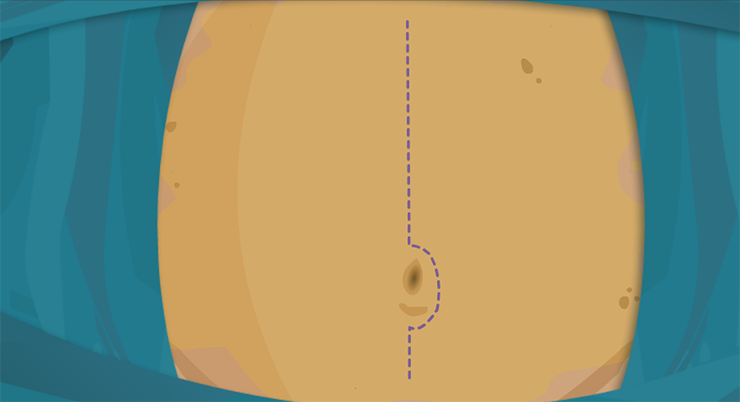
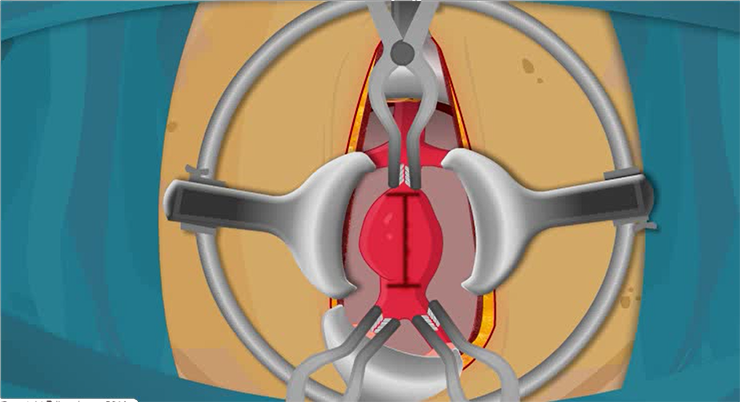
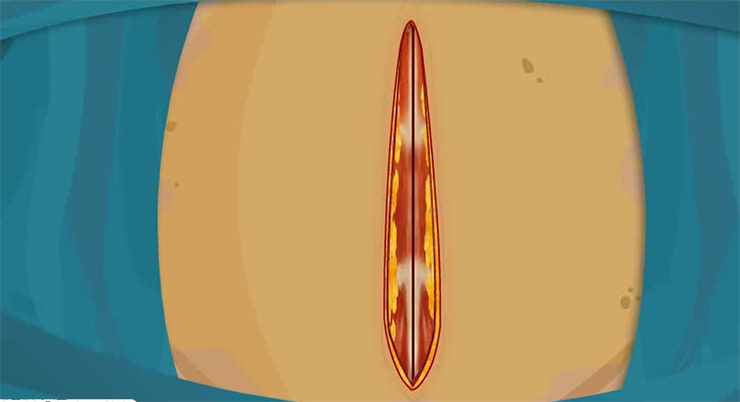
Click and drag the scalpel along the guide line to make the incision.
 1
1 2
2 3
3 4
4 5
5 6
6